Nomenclature Nightmare
I recently had a battle with some weaving terminology and fought it out in this blog
Hello weavers,
I have recently tangled (once again) with weaving nomenclature. As Madelyn Van der Hoogt said in a class I took with her years ago, "the vocabulary we have for weaving is entirely insufficient"! Not only is it insufficient but it's confusing. The closest analogy I can think of is in botany. Common names for plants are given and used fairly haphazardly, often referring to entirely different species, changing with geographical location and are often lovely and poetic. But lucky botanists have the scientific names of plants to rely on when the going gets tough. We weavers are kinda stuck in the common name zone and don't have a highly developed taxonomy with a reliable classification system. Imagine if we had a Domain, Kingdom, Phylum, Class . . . for every interlacement?
This confusion seems to stem from a few things, weaving is OLD, and anything that spans millennia is going to accumulate different words for the same thing, but also the same terms for different things. This applies to both structure and fabric. For example, what we now think of as "tattersall" is a pattern of regularly-spaced, thin, warp stripes in two colors, woven "as drawn in" to form a checked pattern in plain weave, usually in cotton and usually used for shirts,
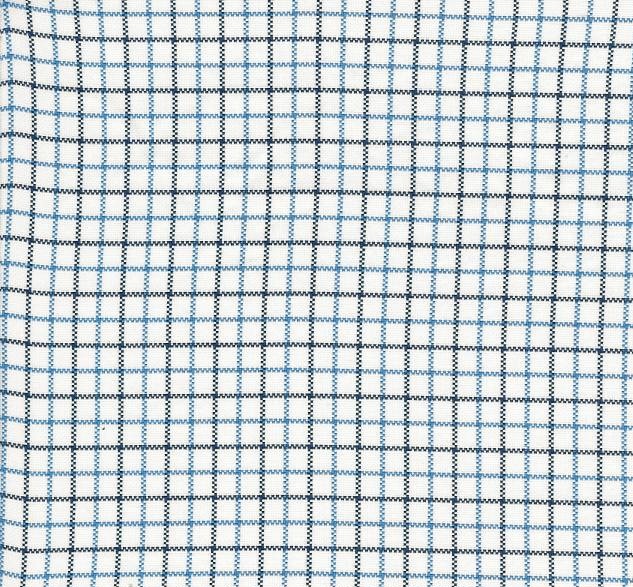
image of Tattersall fabric from Wikipedia
but it originally comes from Tattersall's horse market where the the pattern was created for wool horse blankets.
We also have a very broad geographical range, so terminology may be different in different regions of the globe. I don't simply mean different languages, but perhaps different ways of understanding the fabric. An example of this was the way the word "calico" morphed from its origins in India where it was woven and called "chaliyan" to mean the unbleached plain weave fabric that was the base of the printed cotton textiles in England to mean a small scale, usually floral printed fabric in the US.
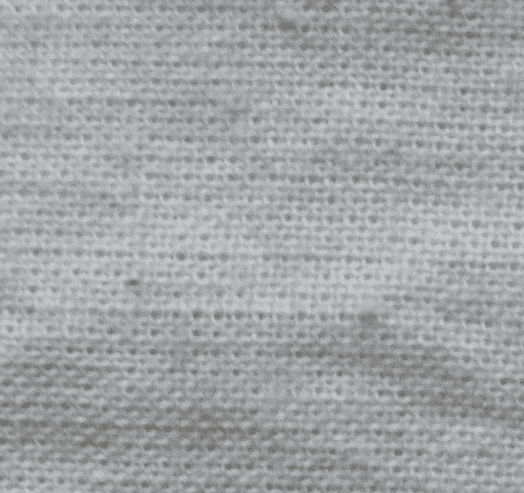
image of unbleached cotton fabric called calico
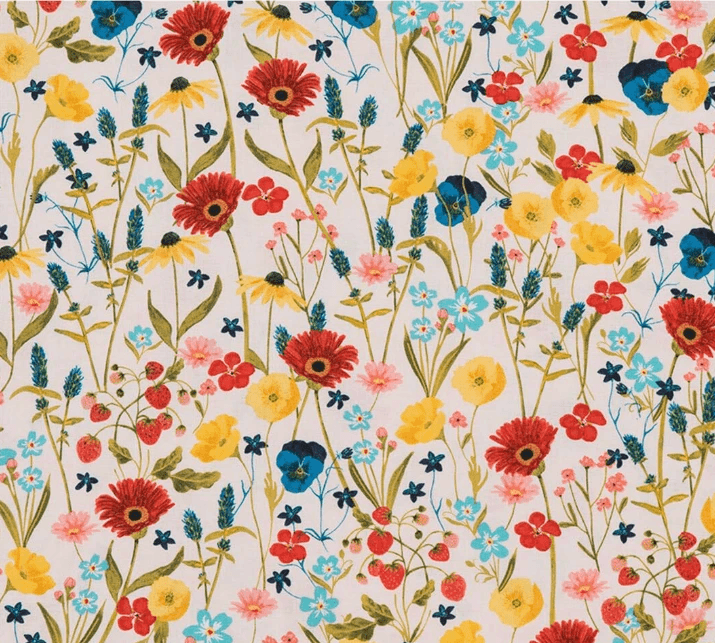
image of printed cotton fabric called calico
So we have old terminology that may differ from modern terminology and different terms for fabrics based on region, but we also have a bit of confusion when it comes to structure vs fabric. Meaning that weavers often think of a fabric or web in terms of its structure, while “civilians”, who are not familiar with many weave structures may think in terms of fabric (structure plus fiber, sett, finishing, etc) Many plain weave fabrics have names that are determined by the "nature" of the plain weave. Think of taffeta vs muslin. Taffeta is very fine and tightly woven (almost warp-faced) fabric, traditionally woven in silk with a pronounced "scroop" (scroop is a delightful word meaning rustle that I just learned). Muslin is also plain weave but loosely woven often in coarse cotton. We also have things like "lace". In hand weaving "lace" is a broad term that covers a variety of different float-rich structures, but "lace" in the fabric world usually refers to knitted or bobbin type lace. The common denominator may be the holes, but I have seen some structures that could be seen as deflected double weave called "large-scale lace". It is a free for all!
However, it's only a problem if it's a problem, right? So, for most hand weavers who see an intriguing draft in a book and choose some yarn and happily weave away, it’s not a problem if the structure is called a cell weave or honeycomb or both.
It may be a bit of a problem for teaching a structure or writing a pattern. For example, I thought I had a pretty good handle on the world of deflected double weave when I was editing a pattern for Handwoven Magazine. Someone wrote a pattern from an old Danish draft that combined basket weave with areas of houndstooth in plain weave. It was categorized in the Scandinavian books under "cell weaves" and I jokingly referred to it as Houndstooth of the Basketweave (the name was rejected by the editor in chief:) But my very-experienced co-editor said "deflected double weave dumb dumb" when I asked her what the structure should be called. Okay, she might not have said "dumb dumb", but that is what I heard. I saw the elements that coincided with deflected double weave (areas of plain weave juxtaposed with float areas), but instead of the floats and plain weave areas alternating, they were clustered, thus the confusion. She was probably correct, and ultimately what the structure was called wasn't critical.
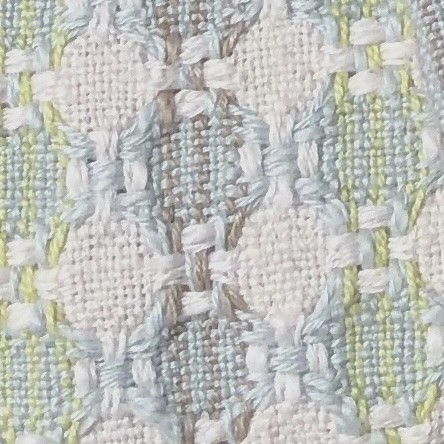
image of the Danish draft called "cell weave" deflected double weave" and possibly large-scale lace
Another example that I encountered recently was when I was writing a pattern for stitched double cloth. I wanted to home in on a definition, so I pulled out a few of my treasured reference books . . . and got precisely nowhere! Depending on who you're reading, "stitched double cloth" is a broad umbrella that includes Piqué and Matelessé, or Matelessé is a broad term that includes Piqué, or Piqué is a broad term that includes Matelessé, and they are all double weave, or they are not all double weave, or they CAN all be double weave but not always. Donna Sullivan writes eloquently about this nomenclature nightmare in her monograph Piqué: Plain and Patterned. As I read the different takes on this, I came to the following conclusions: Piqué can be "closed," meaning that it is 2 separate layers of cloth stitched together by bringing the bottom ends up intermittently to form a kind of quilted effect (this is what stitched double cloth is to me). But Piqué can also be 2 layers of cloth — one layer beamed separately and woven with tighter tension to make the quilted effect more pronounced. But it can also have stuffing between the layers to add to the quilt-y quality. And it can also be "open," meaning that the back side provides the "stitchers" but is not fully woven, so technically not a double weave. Matelessé can simply be a more complexly patterned Piqué often woven on Jacquard looms, or a synonym for piqué (thus stitched double cloth). But in the world of "civilians" piqué can refer to being irritated (as in “a fit of pique” . . . pretty funny) or a waffle or corded fabric made of cotton. All the meanings of "piqué" derive from the French word to "prick" or quilt according to wikipedia.
I came down on the side of stitched double cloth as my term of choice. And I would also like to state my preference for descriptive terminology as a general rule. For example, we often use the term Bergman to refer to a "single 3-tie unit weave" because it was popularized by Margaret Bergman. However, "single 3-tie unit weave" (though a little less poetic) is better to me because it tells you what it is, AND it gives you the freedom to use those three ties any way you want and not worry if Margaret would approve.
I am all for learning weaving history and who the stellar foremothers (and fathers) of our craft are, but for a practical way to remove some of the confusion around weave structure, sticking with the descriptive names is a good choice in my mind. Twill for twill is good. Trying to come up with a descriptive name such as "diagonally progressing intermittent interlacement" seems like a fool's errand.
Sadly, I don't have a solution. Far greater weaving minds than mine have delved into this and we are still without a coherent taxonomy. I want to believe that it is because it is such a complex, interconnected and evolving arena (tell that to the botanists!), but it may be that we just have to relax and accept the often evocative vocabulary that we have and get it on the loom, whatever it is called.
Lisa
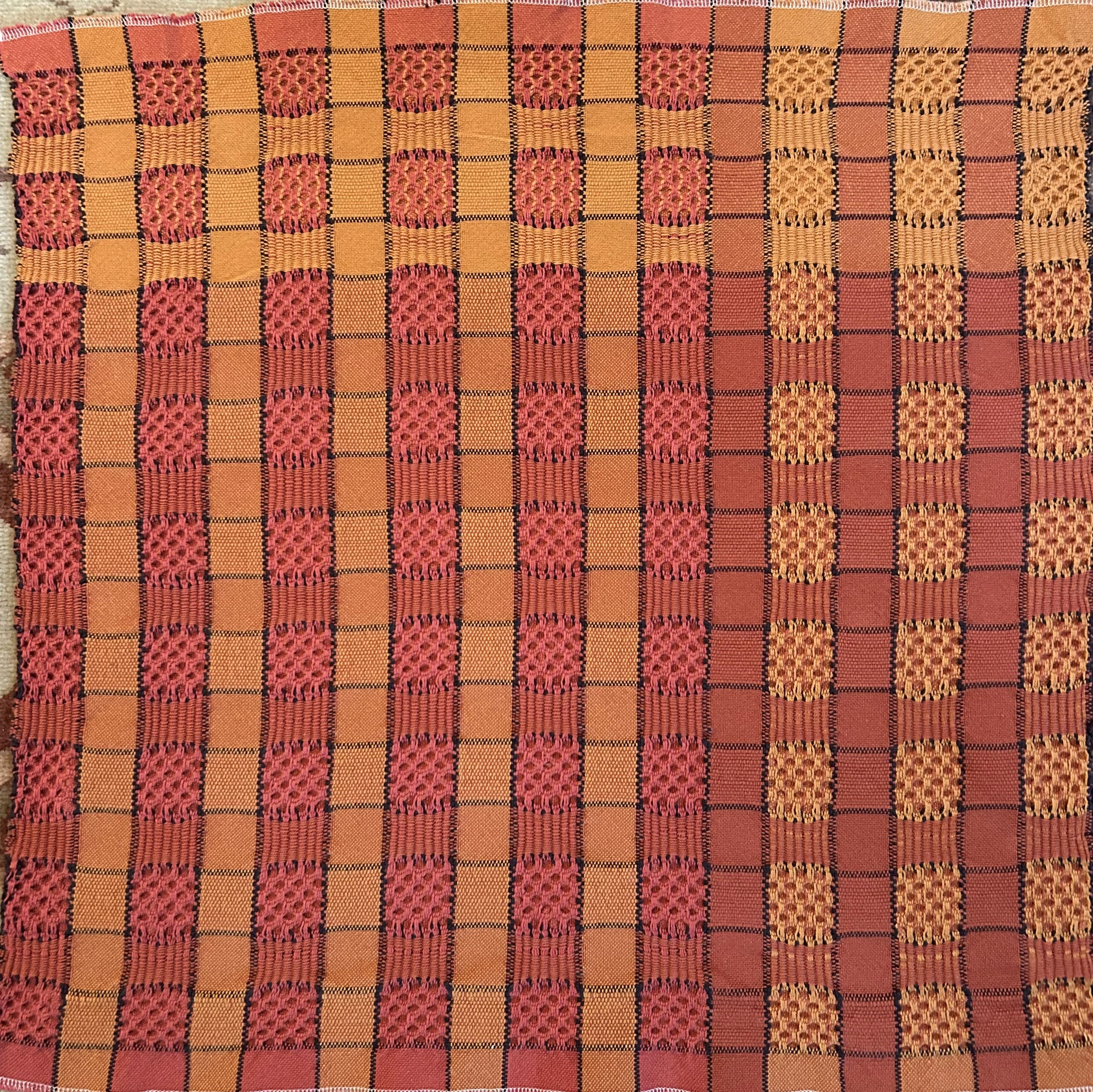
Banner picture: a sample of dimity or southern dimity or honeycomb variation in cotton
Comments