Down the Summer & Winter Polychrome Rabbit Hole Part 2
Part 2 of the S&W polychrome rabbit hole - and the answer is . . .
After much deliberation I decided to weave the final 4 napkins of the Polychrome warp in the dukagang style.
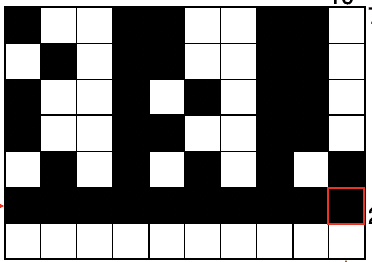
Dukagang tie-up
It was a difficult decision because I was torn between my intuition that the correct tie-up would yield stiffer napkins and the desire to see the both tie-ups in a few different color ways. My curiosity won. The dukagang style napkin is not exactly stiffer, but fatter,
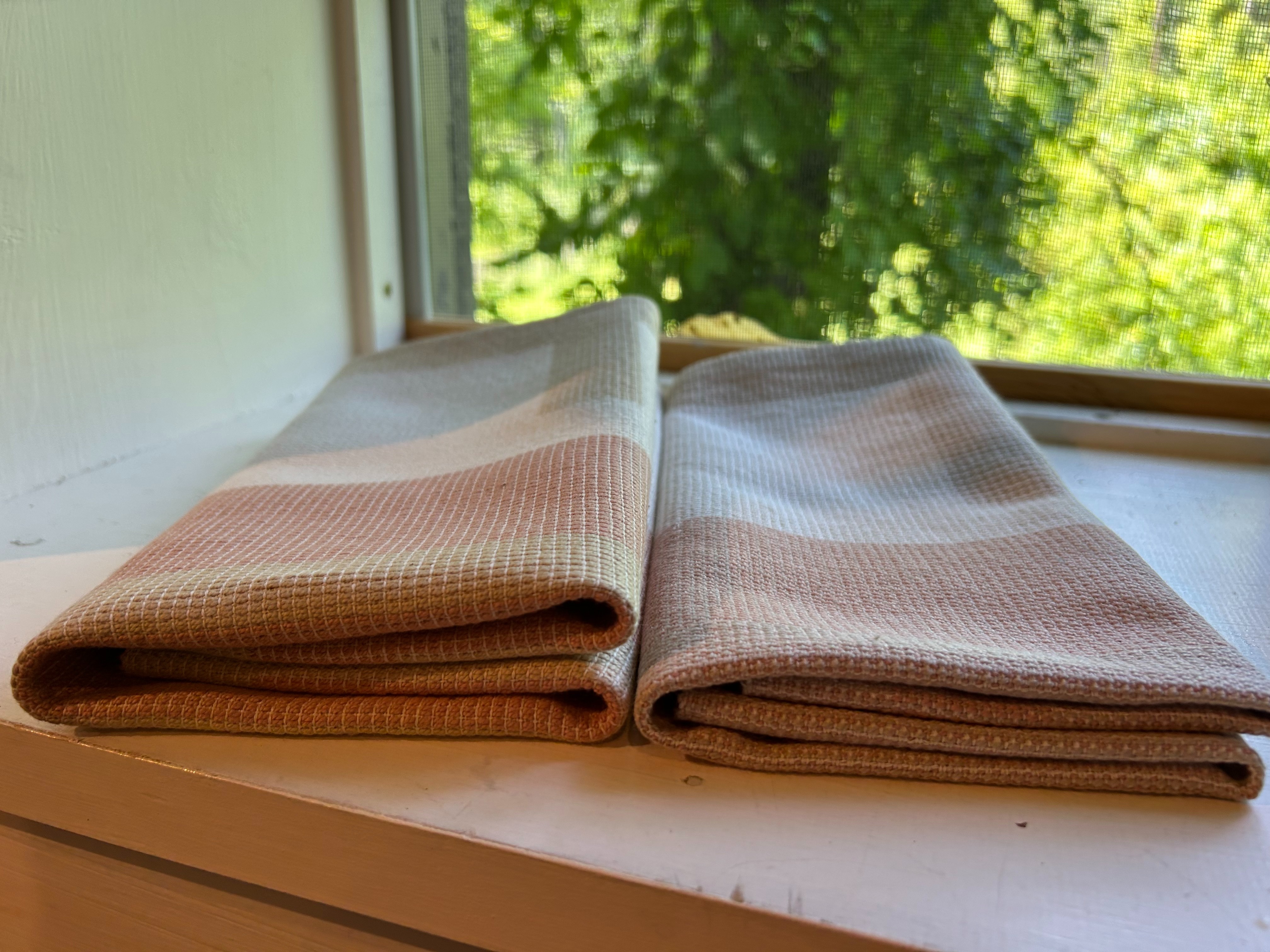
Dukagang napkin on left, alternating tie-up on right
and there are a couple of other things to look at.
The colors are, as expected, more saturated, the strange weft shifting at the warp block changes has disappeared in the dukagang version and the ppi is at 60 as predicted, but unexpectedly the dukagang version shrank more in the warp direction (there is about 1" difference even though they were woven to the same length). The hand isn't that bad. It is a plump napkin, but not un-usable.
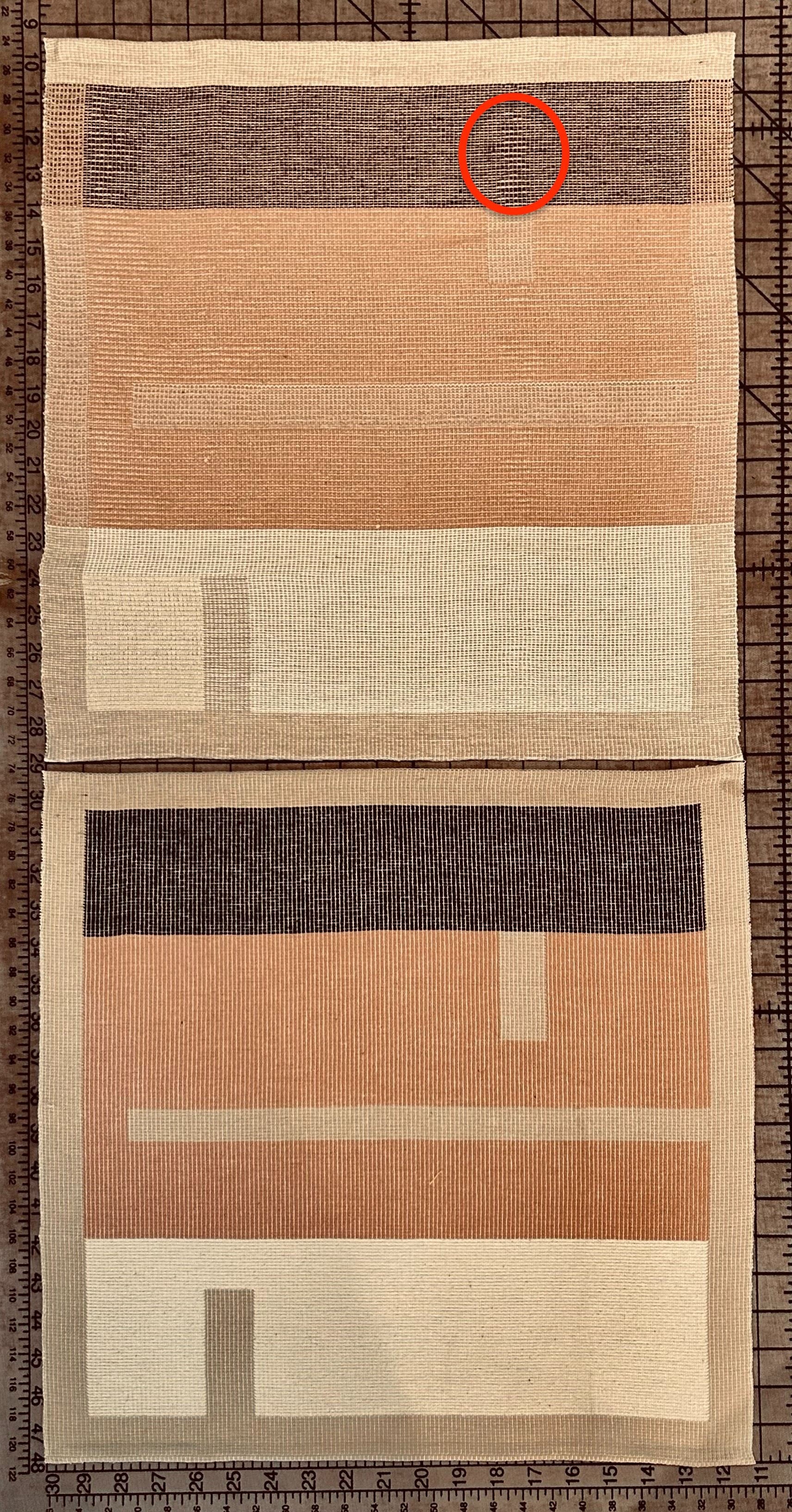
Dukagang napkin on bottom, alternating tie-up on top - notice the strange weft shifting on top napkin
I used a ribbon template for every napkin, so they were all woven to the same length even though I kinda winged the design block sizes, as you can probably see. I winged the treadling block sizes because my ppi was not as expected in the alternating versions, so I had to decide the number of treadling repeats at the loom. You will see that the correct versions are more uniform in treadling block size both because I was getting more familiar with the weaving and because the ppi became more predictable.
I also decided to tie-up to the dukagang tie-up after weaving the first "corrected" napkin. See bottom napkin.
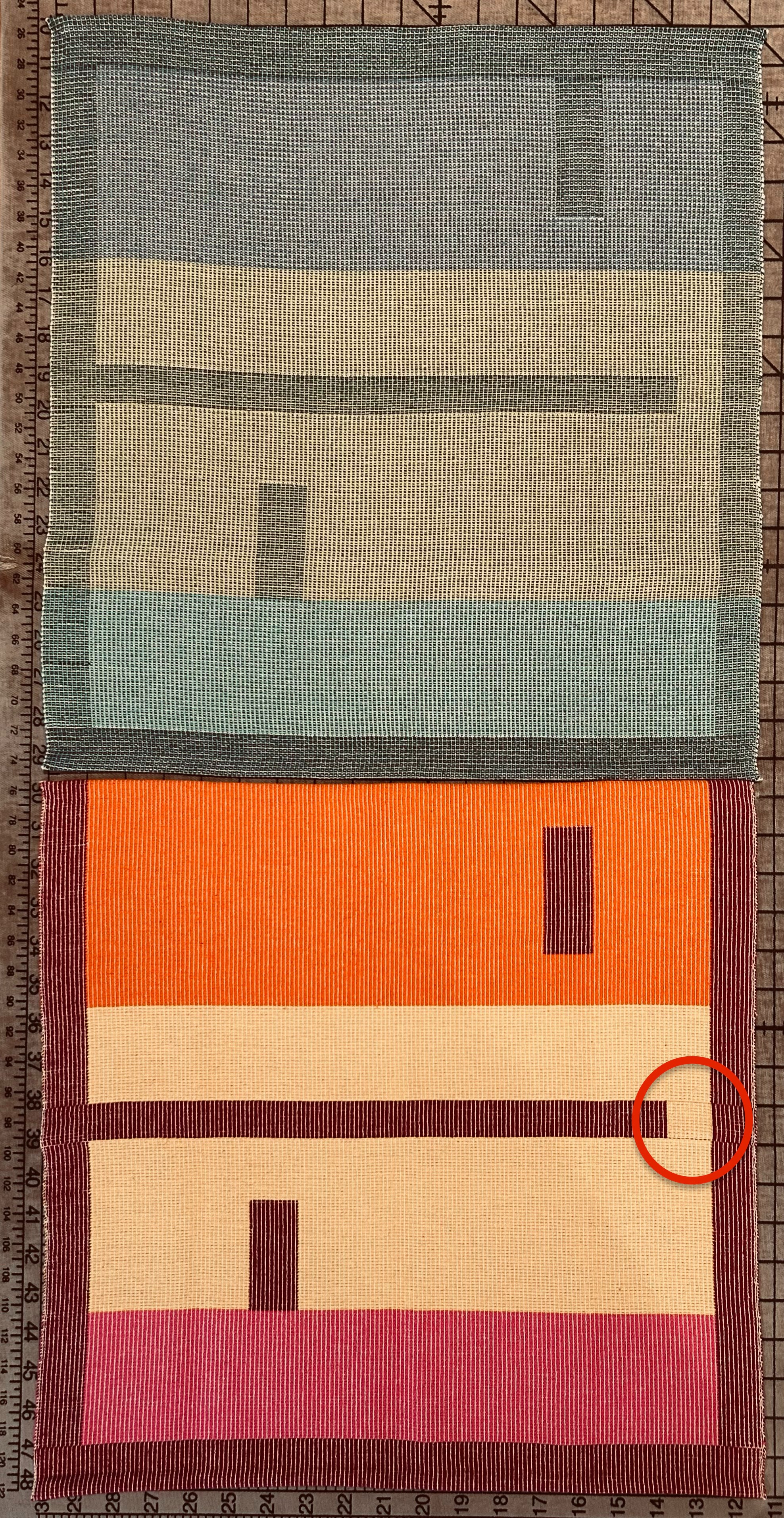
Bottom is the first napkin using the new tie-up. I didn't weave these color ways in both versions . . . I ran out of warp . . .
It took me a couple of days to make my tie-up decision, and I obviously forgot my treadling block order in that time as you can see from the missing border at the top of the bottom napkin. But the interesting thing about this napkin is that I used the tie-up from the reading I had done.
This tie-up changes the tie-downs after every pair of treadles or every treadling block.

Tie-up with tie-downs changing after each treadling block
I had two problems with this. The first was at a glance I noticed that the first treadling block and the last would be the same because of the odd number of blocks I was using, and the second (once I started weaving) was that it meant that the characteristic dukagang lines changed at some treadling block changes depending on my treadling block sequence – and didn't look good! (see image above). So I changed the tie-up again to straight dukagang tie-downs.
I started this project slightly unthinkingly using alternating tie-downs, observed some odd behaviors, changed to the tie-downs alternating at the block changes and didn't like the way that looked with my particular design, so went to the dukagang arrangement which looks better and behaves as I would expect Summer & Winter to work.
The other slightly weird thing I noticed was that the weft shifting (which was my least favorite feature of the alternating versions) seemed to calm down on subsequent color ways. I am not sure whether this is a color effect or that I was messing around with the tie-up so much that I made an adjustment I don't remember before changing to the final dukagang style.
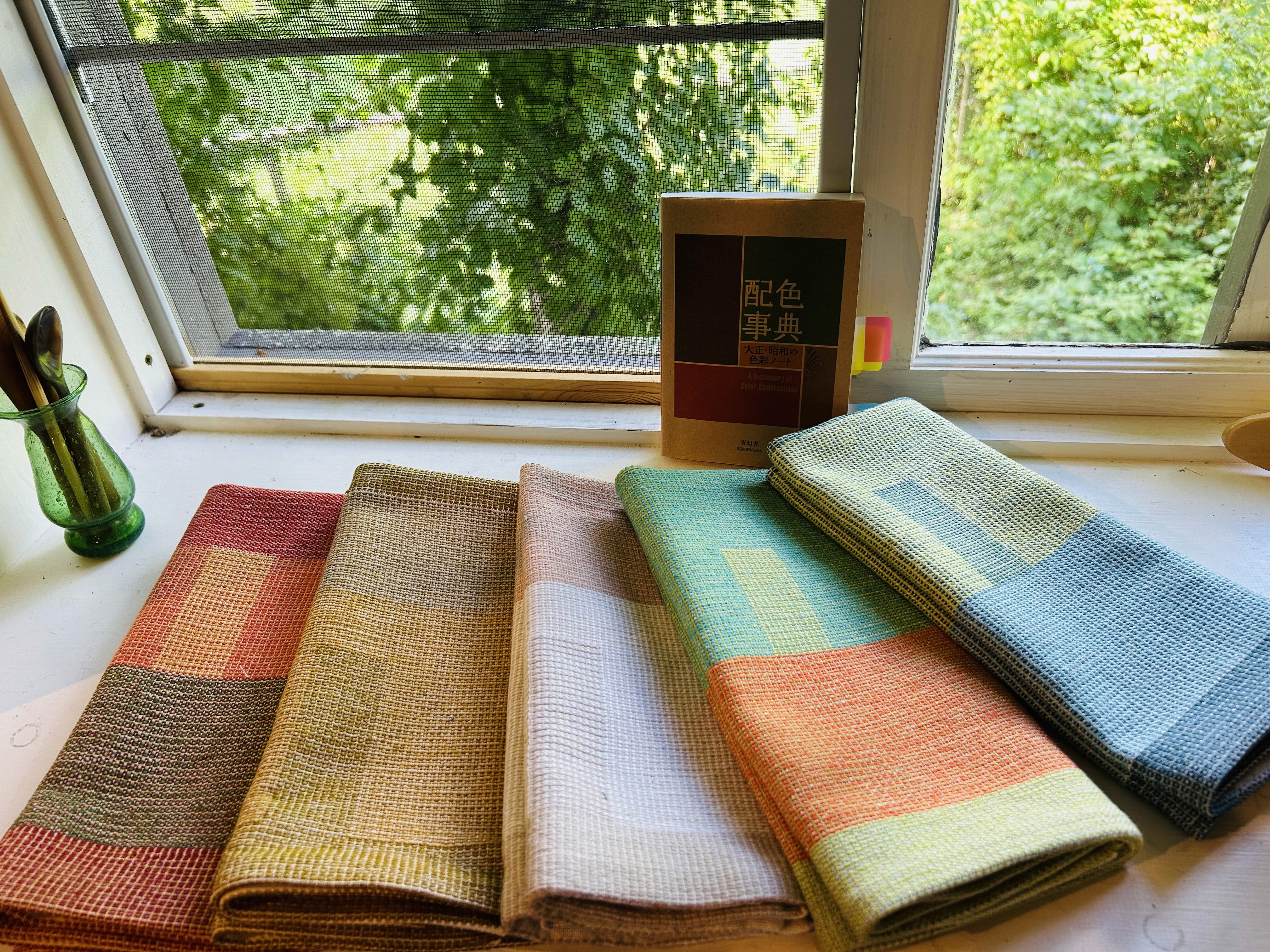
Napkins using the alternating tie-downs
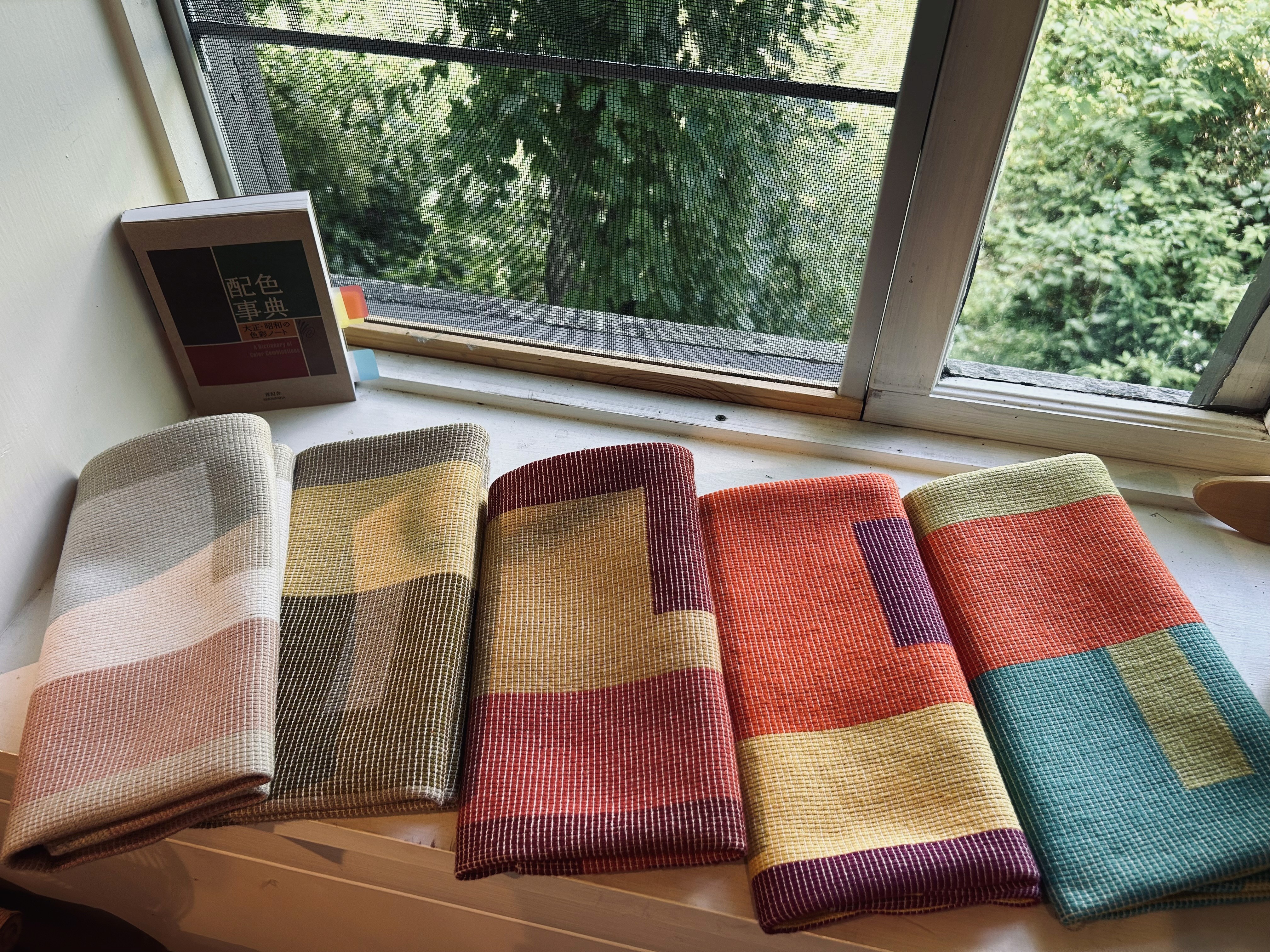
Napkins using the dukagang-style tie-downs
I still have some depths of this rabbit hole to plumb, but I am not sure that the "correct" tie-up is completely preferable to the "incorrect". The hand of the alternating napkins is better for napkins, and the slightly de-saturated look is appealing to me in some ways. It lends a little more mystery to choosing colors because you get more mixing than you do in the dukagang versions. The alternating tie-up napkins are a bit messier, but I think that is because I wove them first and wasn't paying too much attention to finessing my block changes, etc, I will clean things up in my next iteration. I think I might stop calling the alternating version the incorrect version, and think of it as another possibility.
Lisa
Banner picture:
Comments